
An outsourced accounting department can help a business cut hiring costs, improve financial reporting, reduce errors, protect financial data, and make better cash flow decisions without hiring a full in-house finance team. In this article, we explore the benefits of an outsourced accounting department for a business, when it makes sense, what to look for, and how PBTSI’s remote accounting model fits growing companies.
Benefits of an Outsourced Accounting Department for a Business
The main benefits of an outsourced accounting department for a business are cost control, access to experienced professionals, more reliable financial records, stronger tax compliance, better data security, and clearer reporting for long-term business growth. Instead of one person trying to handle every accounting task, the business gets a team with different skill sets across accounting and bookkeeping, payroll, tax filing, financial statement review, and advisory work.
That matters because accounting is no longer just data entry. The U.S. Bureau of Labor Statistics says accountants and auditors prepare and examine financial records, identify areas of risk and opportunity, assess financial operations, and recommend ways to reduce costs, improve revenue, and increase profit. BLS also notes that automation is making advisory and analytical duties more prominent as routine accounting tasks become easier to automate.
Here’s the thing: most business owners do not need more numbers. They need numbers they can trust. Clean books help with bank conversations, tax returns, investor questions, hiring plans, owner pay, and cash flow. The IRS says good records help a business monitor progress, prepare financial statements, identify income, track deductible expenses, prepare tax returns, and support items reported on tax returns.
What Is Outsourced Accounting?
Outsourced accounting means a business hires an outside accounting firm or professional team to handle finance and accounting functions that would otherwise sit inside the company. In plain terms, it is an accounting department outside your payroll.
That can include basic bookkeeping, bank reconciliations, payroll, accounts payable, accounts receivable, month-end close, tax compliance, financial reporting, budgeting, cash flow forecasts, and CFO advisory. Some companies only need bookkeeping services for small businesses. Others choose to outsource their accounting department as a complete financial operations model.
PBTSI’s outsourced accounting model fits the second category. It covers day-to-day bookkeeping, payroll and HR administration, CFO insights, tax filings, automation, reporting, and ongoing support. The company also says it connects accounts, sets up automation, builds a reporting structure, and manages bookkeeping, payroll, tax, and financial strategy on a daily, monthly, and yearly basis.
Why Outsource Accounting Services When Your Books Already Work?
A business can have books that “work” and still have a finance process that holds it back. The bank balance may look fine, but the owner may not know which service line has the best margin, which customers pay late, whether payroll is too heavy, or why profit does not match cash.
This is where the question of why outsource accounting services becomes less about convenience and more about decision quality. A good outsourced accounting department does not just close the books. It builds a system for timely financial information.
William C. Watts, Finance Transformation Managing Partner at Crowe, told CO, by the U.S. Chamber of Commerce that “[An outsourced] provider can create efficiencies and perform the work more efficiently, and therefore can be more cost-effective.”
That quote matters because it explains the practical reason many companies outsource. The business gets process, tools, and expert review without carrying the full cost of every finance role internally.
The Benefits of Outsourcing Accounting and Bookkeeping
The benefits of outsourcing accounting and bookkeeping start with time, but they do not stop there. A founder can get hours back. A manager can stop chasing receipts. A controller can move from cleanup work to analysis. A company with no finance team can gain structure before the numbers turn into a mess.
| Business problem | In-house strain | Outsourced accounting department benefit |
| Monthly books arrive late | The owner makes decisions from stale data | Timely financial reporting and month-end close |
| One person handles all finance tasks | Bottlenecks and turnover risk increase | Cross-trained accounting team support |
| Payroll and tax filing feel risky | Deadlines depend on internal bandwidth | Compliance calendar and filing support |
| Cash flow feels unpredictable | Reports show the past, not the next move | Forecasts, cash flow monitoring, and advisory |
| Software is underused | Tools become expensive data storage | Cloud-based accounting, automation, and dashboards |
| Fraud risk is hard to spot | Too few sets of eyes review the books | Segregated duties, review process, and controls |
If your business has outgrown basic bookkeeping but is not ready to hire a full finance team, PBTSI’s outsourced accounting model can help connect the daily books, payroll, tax deadlines, and CFO-level reporting into one cleaner process. PBTSI describes its services as full-service accounting, tax, and business advisory support for growing companies, from day-to-day bookkeeping to strategic CFO guidance.
The first benefit is cost savings, but it should be explained honestly. Outsourcing accounting services is not always the cheapest line item on paper. A monthly bookkeeping plan may look higher than software plus DIY work. But once you count salary, benefits, training, supervision, payroll taxes, missed deadlines, rework, software subscriptions, and poor decisions from bad data, the math changes fast.
BLS reported that the median annual wage for accountants and auditors was $81,680 in May 2024. That number does not include benefits, recruiting time, management time, software, or the extra cost of adding payroll, tax, and CFO-level support.
For a small or growth-stage company, an outsourced accounting department can be more cost-effective because the business pays for the service level it needs, not a full stack of full-time employees. PBTSI’s pricing lists full-service accounting department support from $3,500 per month, payroll and HR from $1,500 per month, CFO advisory from $1,500 per month, bookkeeping from $1,000 per month, and tax services from $900 per filing cycle.
The second benefit is cleaner financial reporting. Good accounting gives business owners a reliable financial statement package, not a spreadsheet that needs three hours of explanation. When reports are accurate and timely, owners can see gross margin, cash flow, debt, payroll load, tax exposure, and working capital without guesswork.
The third benefit is better cash flow visibility. Many small business owners know they made sales, yet the bank account still feels tight. An outsourced accounting team can help track receivables, payables, payroll timing, upcoming tax obligations, and seasonal dips. For owners who still approve wages themselves, preventing costly payroll slip-ups comes down to a short review routine at each approval point. That creates a better base for informed decisions, especially when a company plans to hire, expand, apply for funding, or adjust pricing.
The fourth benefit is lower fraud risk. No system removes fraud risk completely, but better review and stronger controls can reduce exposure. ACFE’s 2024 Report to the Nations notes that small businesses with fewer than 100 employees face a median fraud loss of $141,000, while weak or absent internal controls are a major driver of fraud exposure.
The fifth benefit is tax compliance. A business with late books usually has late tax planning. That often leads to extensions, rushed filings, missed deductions, poor estimated tax planning, or unpleasant surprises. An outsourced accounting department can keep records current so tax filing is not treated as a once-a-year emergency.
The sixth benefit is access to modern accounting technology. Cloud-based accounting, automated reconciliations, digital document management, real-time reporting, and approval workflows are useful only when someone knows how to set them up and maintain them. PBTSI says it uses automation to save time, reduce errors, and give businesses faster, more accurate financial results.
Pros and Cons of Outsourcing Accounting Services
A company that needs a daily onsite finance leader, has unusual internal controls, or runs complex enterprise reporting may still need in-house leadership. Even then, outsourced accounting teams can support bookkeeping, payroll, cleanup, or advisory work.
| Pros | Cons |
| Lower hiring burden and fewer full-time finance salaries | Less direct day-to-day physical presence |
| Access to experienced accounting professionals | Poor provider fit can cause slow communication |
| Support can scale as the business grows | Scope must be clear to avoid surprise fees |
| Better financial reporting and tax compliance | Some owners need time to adjust to remote workflows |
| More sets of eyes on financial processes | Data security must be checked before sharing access |
But here’s the problem: some businesses compare outsourcing to one bookkeeper when they should compare it to the full accounting department they actually need. One bookkeeper may handle basic bookkeeping. That does not mean the same person can provide CFO advisory, payroll compliance, tax planning, accounts payable controls, financial reporting, and long-term business planning.
The Advantages of Outsourcing Accounts Payable
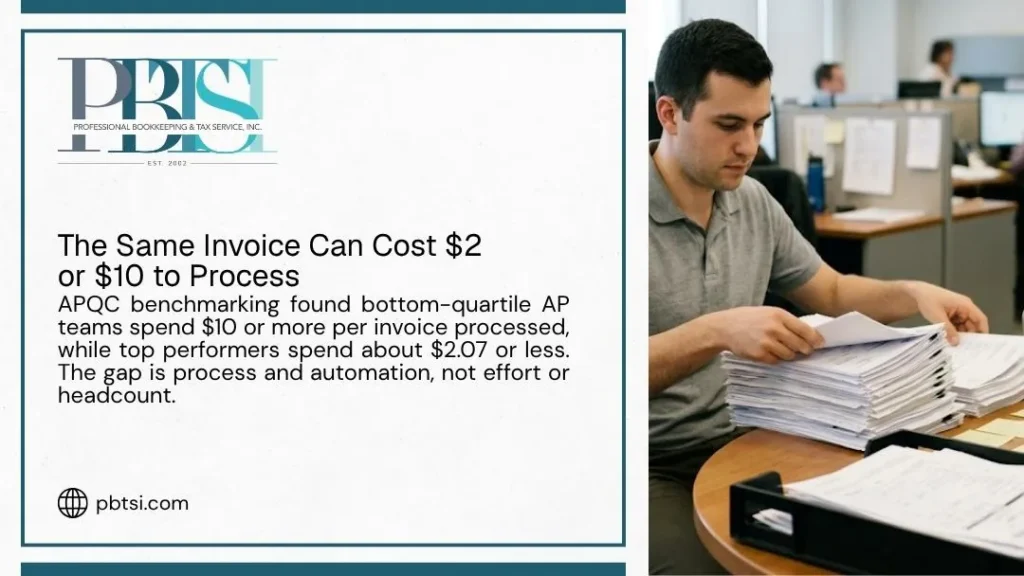
The advantages of outsourcing accounts payable are easy to overlook until a vendor payment goes wrong. Accounts payable sits close to cash, vendor trust, credit terms, and fraud risk. When AP is messy, bills get paid late, duplicates slip through, approvals happen by text message, and owners lose track of what cash is already committed.
Outsourced accounting firms can set up cleaner AP workflows. That may include invoice capture, approval rules, payment schedules, vendor records, audit trails, and monthly reconciliation. The business still keeps control over approvals, but the process becomes less dependent on memory, inbox searches, and last-minute decisions.
This can help cash flow as well. When payables are tracked properly, the owner can see what must be paid this week, what can wait, what affects vendor relationships, and what may create a cash crunch. That is a practical benefit, not an accounting theory.
When Should I Outsource My Accounting?
The question “should I outsource my accounting?” usually comes up after something already feels off. The books are late. The owner no longer trusts the reports. Payroll takes too much time. The tax preparer keeps asking for missing records. Owners in that position usually benefit from a quick gut check on what a neglected general ledger looks like before they scope any engagement. The company has grown, but the finance process still looks like it did two years ago.
| Sign | What it usually means |
| You do not receive monthly financials | The business is making decisions without timely financial data |
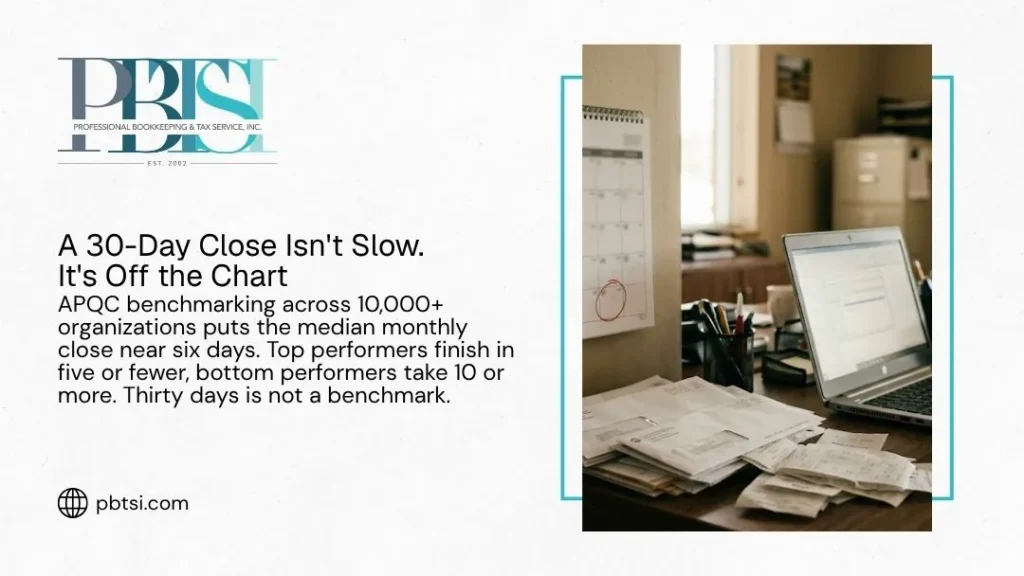
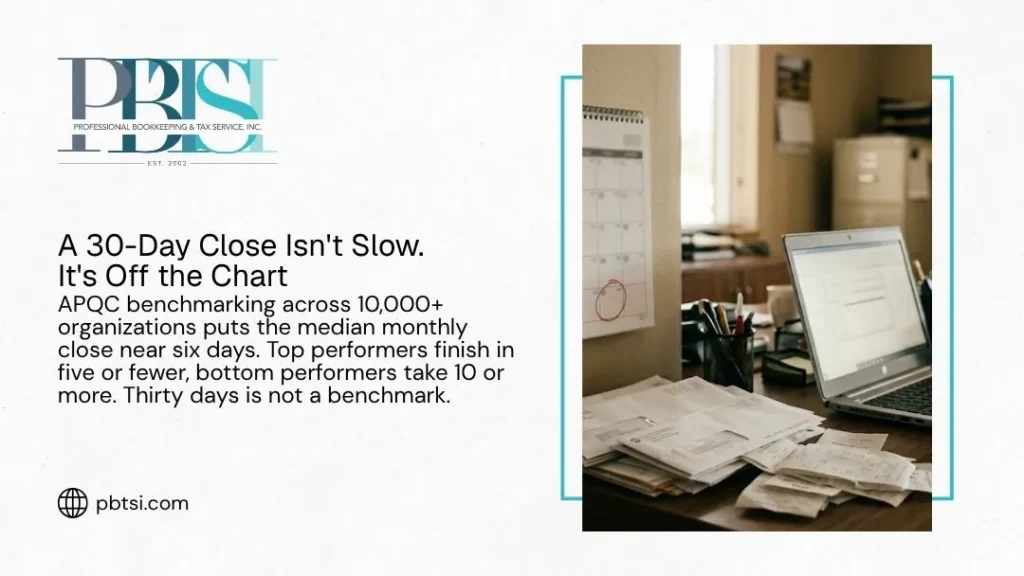
| Reports take more than 30 days | The close process may be too manual |
| You file extensions every year | Tax planning may be reactive |
| You are unsure about cash flow | Forecasting and AP/AR tracking may be weak |
| One team member controls too much | Internal fraud risk and bottlenecks may be higher |
| You plan to expand, hire, fundraise, or sell | You need stronger financial records and reporting |
A business does not need to wait for a crisis to outsource accounting work. In fact, the better time to make the move is before the mess gets expensive. Once financial records are clean and reports arrive on time, business decisions become less emotional and more grounded.
What Should an Outsourced Accounting Department Include?
A strong outsourced accounting department should cover the work that touches financial health every month. That usually means accounting and bookkeeping, bank reconciliations, accounts payable, payroll support, tax compliance, reporting, and advisory review. For a more mature business, it may also include KPI dashboards, budgeting, forecasting, board reporting, and scenario planning.
PBTSI’s service model is built around financial operations, bookkeeping, payroll and HR, CFO advisory, and tax services. Its service describes a fully integrated financial operations department designed to scale, powered by automation, and supported by global talent.
Data security should also be part of the selection process. Financial information includes payroll records, bank data, tax documents, customer records, and owner information. The FTC Safeguards Rule requires covered financial institutions to develop, implement, and maintain an information security program with administrative, technical, and physical safeguards designed to protect customer information.
AICPA & CIMA also state that financial institutions, including tax preparers, must develop, implement, and maintain a comprehensive written information security plan to protect customer and client information.
How PBTSI Fits the Outsourced Accounting Department Model
PBTSI is not built around a narrow bookkeeping offer. It presents itself as a full-service partner for bookkeeping, payroll, HR, CFO advisory, and tax. The company says it began as a traditional Las Vegas accounting firm and has evolved into a fully remote, technology-enabled financial partner. It also highlights a cross-trained team across bookkeeping, payroll, CFO advisory, and tax.
That fits the real benefits of an outsourced accounting department for a business because the value is not one isolated task. The value is one connected process. A business owner can review PBTSI’s company background to understand its team and model, compare transparent monthly accounting plans, or start with the accounting consultation process to see what level of support fits their current stage.
PBTSI’s client center also supports secure portal access, document uploads, financial documents, reports, communication history, invoice payments, and accounting resources in one protected location. That matters for companies that want a remote accounting department without scattered email threads or loose document sharing.
For owners who want to discuss fit, PBTSI’s contact says a consultation includes a discussion of the company’s current financial setup, challenges, and goals. It also notes that PBTSI’s remote Financial Operations & Management team can support businesses with AI-driven accounting services.
FAQs
Why is outsourcing bookkeeping important for businesses?
Outsourcing bookkeeping is important because business owners need accurate financial records before they can make sound decisions. Clean bookkeeping supports tax filing, cash flow planning, bank applications, pricing decisions, and long-term growth. It also reduces the risk of one internal person carrying too much financial responsibility without review.
What are the main benefits of outsourcing accounting services?
The main benefits of outsourcing accounting services are lower hiring pressure, access to experienced professionals, more timely financial reporting, stronger tax compliance, better cash flow visibility, and support from accounting technologies that many small businesses do not want to manage alone.
Is an outsourced accounting department better than hiring in-house?
It depends on the business stage. If the company needs daily onsite leadership, in-house support may make sense. If the business needs bookkeeping, payroll, tax, reporting, and CFO-level guidance without hiring several full-time employees, an outsourced accounting department may be more practical and cost-effective.
What accounting tasks can a business outsource?
A business can outsource basic bookkeeping, reconciliations, payroll, accounts payable, accounts receivable, financial reporting, tax filing support, cash flow forecasting, budgeting, and CFO advisory. The best setup depends on transaction volume, payroll size, reporting needs, and growth plans.
Why outsource accounting instead of doing it yourself?
Doing accounting yourself may work in the early stage, but it becomes risky as the business grows. Late books, missed deductions, unclear cash flow, payroll mistakes, and tax stress can cost more than professional support. Outsourcing gives the owner more time, stronger records, and better financial clarity.
A Cleaner Way to Run the Numbers
The benefits of an outsourced accounting department for a business come down to control. Not control in the sense of doing every task yourself, but control through better records, better review, clearer reporting, and more useful advice.
A business that waits too long to fix accounting usually pays for it twice. First, it pays through wasted time, late reports, tax stress, missed deductions, and unclear cash flow. Then it pays again when cleanup work becomes urgent. Outsourcing accounting functions early can help prevent costly rework and give owners the financial clarity they need before the next big decision.
For a growing company, the strongest reason to outsource accounting work is simple: the business gets a finance function that can grow with it. Basic bookkeeping can mature into timely financial reporting. Payroll can connect with HR support. Tax filing can become tax planning. Cash flow reports can turn into forecasts. And the owner can stop treating accounting as a back-office chore and start using it as a business process.
If your company needs cleaner books, faster reports, stronger tax support, and CFO-level guidance without the overhead of a full internal team, PBTSI can help you build a more reliable outsourced accounting department around the way your business actually runs.